
In W.P. (Civil) No.155 of 2023-SC- Top Court permits Bar Associations representing lawyers in DRTs/DRATs to submit their representations to Department of Financial Services, if any specific difficulties are encountered in e-filing process
Justices D.Y. Chandrachud, Pamidighantam Sri Narasimha & J.B. Pardiwala [29-03-2023]
Read Judgment: M. P. High Court Bar Association v. Union of India & Ors
Tulip Kanth
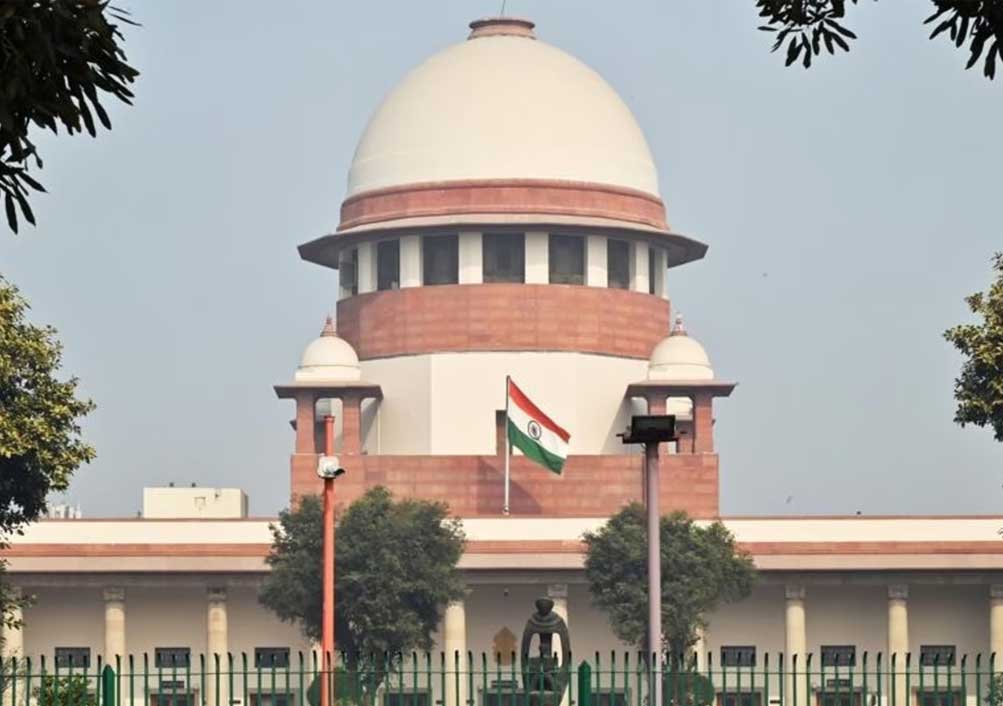
New Delhi, April 7, 2023: The Supreme Court has recently directed all the Chairpersons of the DRATs and the Presiding Officers of the DRTs to submit reports to the Department of Financial Services on a monthly basis initially for a period of six months, pointing out the experience with e-filing and suggesting, if any upgradation of the facilities or the software is necessary.
“E-filing provides for 24x7 access to the court system and, in fact, facilitates the convenience of lawyers as well as litigants. With the march of technology, it would be too late in the day to postulate that e-filing should not be adopted. As a matter of fact, the decision to take up e-filing must be replicated by other tribunals and courts in the country, including the High Courts in a phased manner and that it eventually becomes mandatory”, the Larger Bench of Justice D.Y. Chandrachud, Justice Pamidighantam Sri Narasimha and Justice J.B. Pardiwala asserted.
The Department of Financial Services issued a notification on January 23, 2020 by which the Debt Recovery Tribunals (DRTs) and Debt Recovery Appellate Tribunals (DRATs) Electronic Filing Rules 2020 (2020 Rules) were notified. Originally, the e-filing of pleadings and applications was made optional. On July 22, 2021, a notification was issued by which the e-filing of cases involving a value of Rs 100 crores and above was made mandatory.
On January 31, 2023, a notification was issued by the Union government in exercise of powers under Section 36 of the 1993 Act for amending the Electronic Filing Rules so as to make e-filing of pleadings by applicants mandatory. Any other form of filing, it was provided, shall not be taken on the record.
These proceedings had been instituted to challenge the provisions of amended Rule 3 of the E-filing Rules and for a direction to the DRTs and DRATs across the country to continue with hybrid filing of pleadings and applications before them.
It was the petitioner’s case that the amendment to the 2020 Rules making e-filing compulsory in all cases irrespective of value with effect from January 31, 2023 was without holding deliberations with all stakeholders. It was submitted that the DRTs are constituted in far flung areas where internet connectivity may not be adequately available. Hence, an exception should be provided for just and sufficient cause, senior citizens and female practitioners and clients.
The Bench was of the opinion that the introduction of e-filing by the Department of Financial Services was facilitated in gradual stages. Initially, with the introduction of the e-filing Rules in 2020, e-filing was made optional at the first stage. In the second stage, e-filing was made compulsory where the pecuniary value of the subject matter in dispute was in excess of Rs 100 crores. The introduction of mandatory e-filing in all cases irrespective of the value of the subject matter was introduced at the third stage.
This, according to the Bench, indicated that the process had been gradual. Sufficient time was given to all stakeholders to adjust to the new regime. A stakeholders training had been carried out and counter affidavit indicates the specific dates on which training programmes have been conducted, the Bench further stated.
Noting that not all lawyers may have access to the facilities required and their needs can and should be addressed by providing facilities in court establishments, the Bench held, “Firstly, we would permit the Bar Associations representing the collective voice of the lawyers in the DRTs/DRATs to submit their representations to the Department of Financial Services if any specific difficulties are encountered in the process of e-filing. The representations should focus on concrete suggestions which have to be implemented to facilitate to e-filing.”
On the issue of help desks set up at the DRTs/DRATs, the Bench recommended to the Union Government that in addition to setting up held desks, if e-sewa kendras are set up at all the centres of the DRTs or, as the case may be, DRATs to facilitate e-filing of cases and provide a one-step solution which encompasses all the e-services at the DRTs/DRATs.
The Top Court also passed a direction that a Standard Operating Procedure (SOP) must be prepared by the Department of Financial Services in consultation with NIC, setting out the facilities at every e-sewa kendras.
The Bench refused to accept the submission that there should be a general exception to female practitioners and litigants and said, “The representations by the Bar Associations on specific difficulties faced in the process of e-filing, and the reports prepared by the Chairpersons of the DRATs and the Presiding Officers of the DRTs should be cognizant of digital exclusion on the basis of gender, while submitting their respective representations/ reports. The help desks can consider providing a dedicated portal to address the grievances of female litigants.”
Thus , the Bench ordered that the exercise which had been directed to be carried out in the above terms should be completed within three months.
This would not preclude the Department of Financial Services from making such further arrangements as are found necessary to deal with an emergent situation in any of the DRTs/DRATs in various parts of the country, the Bench further added.
Legitquest is a Legal-Tech venture run by a versatile team of tech-savvy attorneys, engineers and designers who aim to make the practice of law simpler for its end users. We have eminent jurist Mr. Ram Jethmalani as our patron


Add a Comment