
In SLP (Civil) Nos. 22021-22022 of 2022-SC- Approaching HC for consideration of offer by borrower is frowned upon, says SC while taking judicial notice of interference by P&H HC in commercial matters when alternative forum has been constituted
Justices Sanjiv Khanna & M.M. Sundresh [17-04-2023]
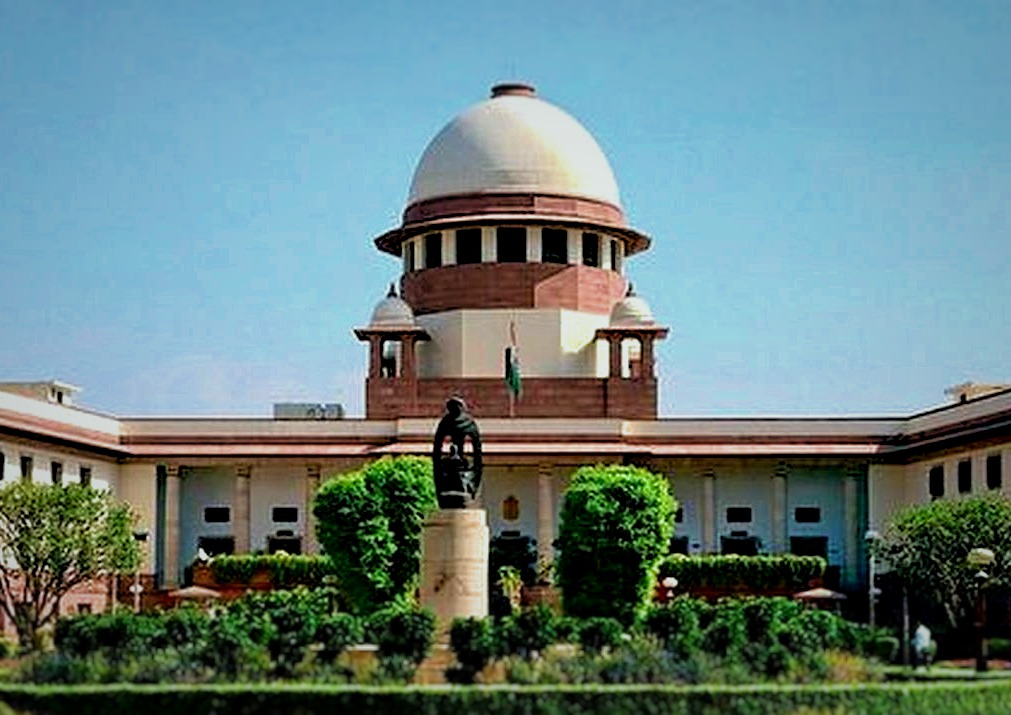
Read Judgment: M/S. SOUTH INDIAN BANK LTD. & ORS Vs. NAVEEN MATHEW PHILIP & ANR. ETC
Tulip Kanth
New Delhi, April 19, 2023: Considering the fact that certain High Courts continue to interfere in commercial matters even though there is an availability of alternative forum, the Supreme Court has raised the concern that same leads to a regular supply of cases before the Court.
“Approaching the High Court for the consideration of an offer by the borrower is also frowned upon by this Court. A writ of mandamus is a prerogative writ. In the absence of any legal right, the Court cannot exercise the said power. More circumspection is required in a financial transaction, particularly when one of the parties would not come within the purview of Article 12 of the Constitution of India”, the Division Bench of Justice Sanjiv Khanna & Justice M.M. Sundresh observed.
The factual background of this case was such that two loans were obtained by the Respondents, being a housing / KCC overdraft loan and a business loan. The accounts of the Respondents were declared as non- performing assets (NPA).Notices under Section 13(2) of the Securitization and Reconstruction of Financial Assets and Enforcement of Security Interest Act, 2002 were issued which were duly replied to by the Respondents, seeking twelve months time to repay the loan.
Within 3 days of the reply, prior to the expiry of the statutory period prescribed, a challenge was laid to the demand notice issued under Section 13(2) by filing Writ Petition. A direction was issued to the Appellants to consider the proposal placed and the Respondents were allowed to remit the dues accrued in five installments instead of twelve. The extended benefit conferred was not utilized by the Respondents, and therefore, a reminder was also sent. Receiving no response, two notices under Section 13(4), were issued.
Impugning the aforesaid notices, two writ petitions were filed by the Respondents. The Debt Recovery Tribunal, though was not functional at the time of filing the aforesaid Writ Petitions, became so from the month of March, 2022. An order was passed by this Court in Special Leave Petition ordering that the pending matters ought to be transferred to the concerned Tribunals when they start functioning with their respective Presiding Officers duly in-charge.
Notwithstanding such orders, the Punjab & Haryana High Court allowed the Respondents to make deferred payment in 20 installments, a relief which was more than the one prayed for. The installments were modified by the Division Bench to 12 months as originally prayed for by the Respondents while declining to interfere with the decision of the Single Judge on merit. Impugning the aforesaid orders, the lender bank had filed the appeals.
The Bench reiterated the settled position of law on the interference of the High Court invoking Article 226 of the Constitution of India in commercial matters, where an effective and efficacious alternative forum has been constituted through a statute.
“We are also constrained to take judicial notice of the fact that certain High Courts continue to interfere in such matters, leading to a regular supply of cases before this Court. One such High Court is that of Punjab & Haryana”, the Bench held.
The Bench further clarified that Courts are not expected to substitute themselves with the decision-making authority while finding fault with the process along with the reasons assigned. Such a writ is not expected to be issued to remedy all violations. When a Tribunal is constituted, it is expected to go into the issues of fact and law, including a statutory violation.
In order to highlight the object behind the Act, the Bench referred to the judgment in Mardia Chemicals Ltd. v. Union of India, wherein it was opined that while such enactment facilitates a faster and smoother mode of recovery sans any interference from the Court, it does provide a fair mechanism in the form of the Tribunal being manned by a legally trained mind.
The Apex Court also referred to its judgments in Varimadugu Obi Reddy v. B. Sreenivasulu, Phoenix ARC (P) Ltd. v. Vishwa Bharati Vidya Mandir, State Bank of Travancore v. Mathew K.C.,United Bank of India v. Satyawati Tondon whereby practice of entertaining the writ application by the High Court in exercise of jurisdiction under Article 226 of the Constitution without exhausting the alternative statutory remedy available under the law has been deprecated.
“...we are conscious of the fact that the powers conferred under Article 226 of the Constitution of India are rather wide but are required to be exercised only in extraordinary circumstances in matters pertaining to proceedings and adjudicatory scheme qua a statute, more so in commercial matters involving a lender and a borrower, when the legislature has provided for a specific mechanism for appropriate redressal”, the Bench held while disposing of the appeals.
Legitquest is a Legal-Tech venture run by a versatile team of tech-savvy attorneys, engineers and designers who aim to make the practice of law simpler for its end users. We have eminent jurist Mr. Ram Jethmalani as our patron

Add a Comment