
IN R. CRIM APPL 427 OF 2013 - GUJ HC- If there are two possible views in an acquittal appeal, the view taken by Trial Court cannot be substituted by reversing acquittal into conviction unless finding of the Trial Court is found to be perverse, unsustainable or manifestly erroneous: Gujarat High Court
Justice J.C. Doshi [23-06-2023]
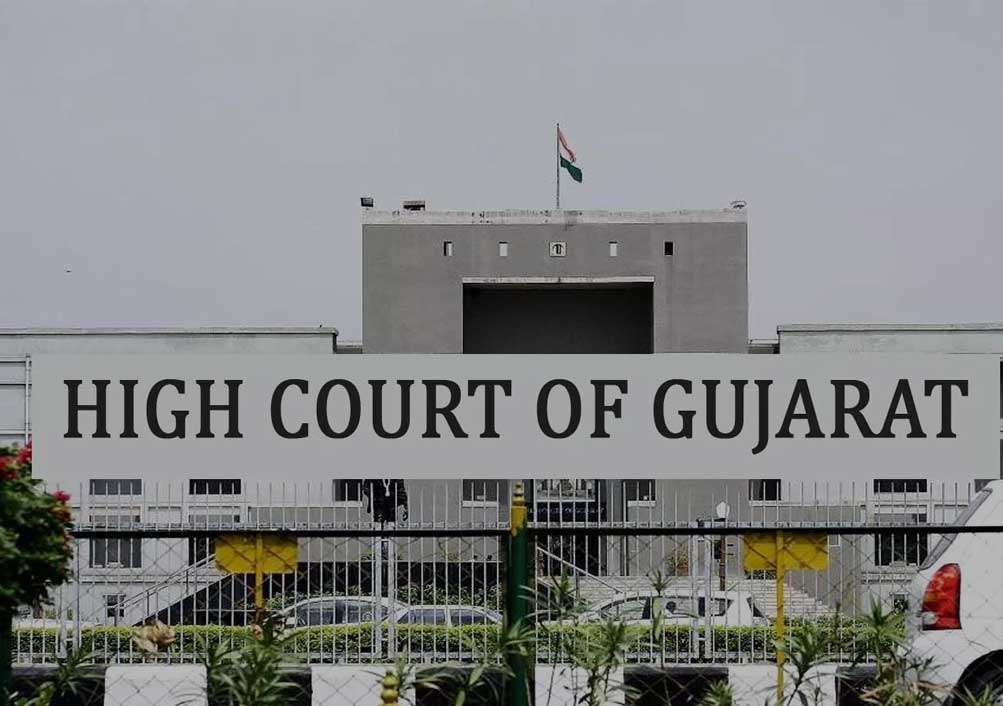
Read more: State of Gujarat v Basirbhai Sulemanbhai Safiya
Simran Singh
New Delhi, June 26, 2023: The Gujarat High Court dismissed an appeal preferred by the State questioning the judgement passed by the Additional Sessions Judge, Jamnagar for offences under Section 135 of the Electricity Act, 2003 and the order of acquittal in favour of the respondent-accused who allegedly owned a house with mala fide intention and without permission, had illegally taken direct electric connection in electric motor of an 10 horsepower appliance by hooking a wire with L.T. Line pole.
The Single-Judge Bench of Justice J.C. Doshi was of the view that the impugned judgment and order being fairly reasoned did not require any interference and the Additional Public Prosecutor (APP) had failed to point out any other point or evidence, which favoured the case of the prosecution.
“It can be noticed that cardinal principles of criminal jurisprudence behold that in an acquittal appeal, even if two view is possible, the view taken by the learned trial Court cannot be substituted by reversing the acquittal into the conviction unless finding of the learned trial Court found to be perverse, or could to have been said contrary to the material on record or demonstrably wrong or unsustainable and manifestly erroneous” reiterated the Bench.
The Bench stated that the APP was not able to point out that how the finding recorded by the Special Court was patently illegal, perverse or contrary to the material on record or against the settled principles of law or his palpably wrong or manifestly erroneous. “Worth to note that the presumption of innocence in a criminal trial operates in favour of the accused till he found guilty. The presumption would be doubled in a case where accused is acquitted after full-fledge trial from the charges levelled against him.”
In view thereof, it was held that no case was made out by the appellant-State warranting interference with the impugned judgement and order of acquittal. Thus, the Court had accordingly dismissed the appeal.
It was the case of the prosecution that the respondent-accused was caught red handed after committing theft of electricity. Thereafter, the complainant lodged the complaint with regard to the incident before Rajkot GEB Police Station. In pursuance of same, the investigating agency recorded statements of the witnesses, collected relevant evidence and drew various Panchnamas and other relevant evidence for the purpose of proving the offence. After having found material against the respondent-accused, charge-sheet came to be filed in the Court of learned JMFC, Jamjodhpur. As jurisdiction to try the offence was exclusively lying with the Special Court, the offence was committed to the Special Electricity Court, Jamnagar as provided under Section 209 of the Criminal Procedure Code,1973 (CrPC).
Upon committal of the case to the Special Electricity Court, Jamnagar, the Sessions Judge framed charge against the respondent-accused under section 135 of the Electricity Act for the aforesaid offence. The respondent-accused pleaded not guilty and claimed to be tried. In order to bring home charge, the prosecution had examined as many as 08 witnesses and also produced various documentary evidence before the Special Court.
On conclusion of evidence on the part of the prosecution, the Trial Court put various incriminating circumstances appearing in the evidence to the respondent-accused so as to obtain his explanation/answer as provided under Section 313 of CrPC. The respondent-accused denied all incriminating circumstances appearing against him as false and further stated that he was innocent and false case had been filed against him. After hearing both the sides and after analysi of evidence adduced by the prosecution, the Trial Judge acquitted the respondent accused of the offences, for which he was tried, as the prosecution had failed to prove the case beyond reasonable doubt.
The Court while examining the scope of interference in the acquittal appeal relied upon the Supreme Court decision in the case of Ram Kumar v State of Haryana which had observed that the powers of High Court in an appeal from order of acquittal to reassess the evidence and reach its own conclusions under Sections 378 and 379, Cr.P.C were as extensive as in any appeal against the order of conviction. But as a rule of prudence, it was desirable that the High Court should give proper weight and consideration to the view of the Trial Court with regard to the credibility of the witness, the presumption of innocence in favour of the accused, the right of the accused to the benefit of any doubt and the slowness of appellate Court in justifying a finding of fact arrived at by a Judge who had the advantage of seeing the witness. It was settled law that if the main grounds on which the lower Court had based its order acquitting the accused were reasonable and plausible, and the same could not be entirely and effectively be dislodged or demolished, the High Court should not disturb the order of acquittal.
The Bench reiterated the settled position of law that unless the reasoning by the Special Court was found to be perverse, the acquittal could not be upset. It was further observed that High Court's interference in such appeal in somewhat circumscribed and if the view taken by the Special Court was possible on the evidence, the High Court should stay its hands and not interfere in the matter in the belief that if it had been the trial Court, it might have taken a different view.
The Bench noted that as per the case of the prosecution, after surprise checking took place, the FIR/complaint was not lodged within 24 hours of checking or disconnection, which was otherwise mandatory as per provisions of Section 135 of the Electricity Act. Thus, the complaint was registered belatedly and no explanation had been offered by the prosecution during the trial.
Moreover, the Court was of the view that it was not established that the person, who had lodged the FIR/complaint, had been authorised by the Electricity Board/Company to lodge the FIR/complaint on behalf of the Electricity Board. “It also appears that no panchnama is prepared to recover the muddamal, no videography or photographs of the surprise checking is done. Even, the prosecution has failed to establish that the spot where the alleged theft of the electricity was found during surprise checking, belonged to and owned by the accused.Close look at the evidence indicates that at the alleged surprise checking to the spot/premises said to have been belonged to the accused was not done in presence of any independent person. The checking report itself indicates no involvement of any independent person. The checking report bears signature of the officer from the Electricity Board/ Company. No explanation is coming out from the deposition of the complainant or the employees part of the checking squad that why independent person has not been made part of the surprise checking or drawing the spot report.”
The Bench stated that the Special Court having taken note of the aforementioned anomaly in the prosecution evidence after referring various authorities under the pronouncement of this Court as well as the Supreme Court, reached to the conclusion that the prosecution had failed to make out a case and to establish the charge levelled against the accused.
Legitquest is a Legal-Tech venture run by a versatile team of tech-savvy attorneys, engineers and designers who aim to make the practice of law simpler for its end users. We have eminent jurist Mr. Ram Jethmalani as our patron

Add a Comment