
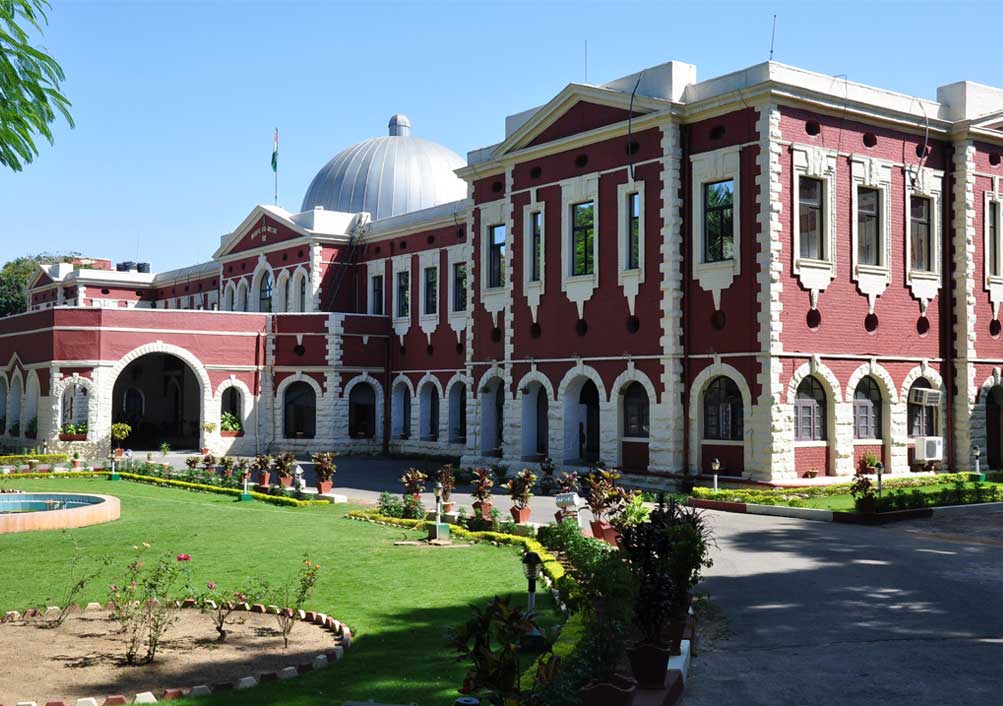
IN M.A. 105 OF 2017 - JHRKND HC- No valid reasoning to arrive upon the conclusion, no answers to the issues framed: Jharkhand High Court lambasts Trial Court for passing ‘perverse and unlawful judgment’, stating it to be done ‘without any application of mind’
Justice Ananda Sen [24-06-2023]
Read more: Reeta Kumari Singh v. Ravindra Singh
Simran Singh
New Delhi, June 26, 2023: The Jharkhand High Court reprimanded the Trial Court for the manner in which it dealt with a Probate Case without stating any reason as to why the Court arrived to such a conclusion nor did the Court answer the issues framed by it during the course of proceedings.
The Single Judge Bench of Justice Ananda Sen was of the view that the District Judge-II, Giridih had disposed of the impugned judgment “in a most mechanical manner and without any application of mind”.
In the matter at hand, the appellant questioned the impugned judgment for being cryptic and lacking reason stating that even the issues which had been framed by the Trial Court had not been answered in a Probate Case. The impugned judgement had held that the Will was not validly executed as required under Section 68 of the Evidence Act, 1872 and the application was not signed and verified by the attesting witness under Section 281 of Indian Succession Act, 1925, thus the application was dismissed, a finding which was challenged by the appellant.
The Bench noted that the subject Will was executed by Shanti Devi, who was the mother of the appellant and the respondents. The Will was executed in favour of the appellant, thus the appellant filed an application for grant of probate. The contesting respondent who was the brother of the appellant who had opposed the said probate case
The Court took note of the issues framed by the Trial Court namely,
- “Whether the Will dated 14.12.1999 in question was valid, genuine and last testament of the late Shanti Devi in favour of her daughter, the appellant?
- Whether the appellant was entitled to grant of the Will?”
The Court noted that the impugned judgment only mentioned the name of prosecution witness 1,2 and 3 and the exhibited documents which had been filed by the plaintiffs. However, paragraph 7 of the impugned judgment mentioned all the documents filed by the plaintiff which were not exhibited. Further the impugned judgement mentioned only the name of the defendant witnesses and none of the documents or the gist of evidences were discussed by the Trial Court.
“In Paragraph No. 12 the trial court noted down the argument which was advanced by the plaintiff, similarly in paragraph no. 13 the argument on behalf of the opposite party has been extracted. In paragraph nos. 14, 15, 16 & 17 the trial court noted and quoted the provision of law i.e Section 276 of the Indian Succession Act, 1925, Section 281 of Indian Succession Act, 1925 & Section 68 of the Indian Evidence Act, 1872. In Paragraph Nos. 18, 19 & 20 the trial court only noted down three citations relied upon by the defendants. Thereafter an heading "conclusion" was typed in the judgment and under the said heading in paragraph no. 21 the issues which the trial court had framed earlier was quoted again and thereafter in paragraph no. 22 the following was held and the case was dismissed.”
The Bench took note of paragraph 22 of the impugned judgement which had stated that “22. As stated earlier since the Will has not been validly executed by deceased Shanti Devi as required under the law Section 68 of Evidence Act and the so called Probate petition has also been not signed and verified by the attesting witness, which has also been required u/s. 281 of Indian Succession Act, 1925. These are the mandating provision for grant of Probate.”
The Bench observed that “This is the manner in which the case was dealt with by the trial court. There is no reasoning given as to why the court arrived to such conclusion nor the issues which the court had framed was answered.”
The Court stated that the Trial Court had relied upon Section 68 of the Evidence Act and held that the Will was not validly executed as required under the said provision which deals with proof of execution of the document required by law to be attested.
“In the said Will there is a signature of Ranjit Kumar Verma who is also a witness before the trial court (shown as P.W. 5 but there are only three witness). Whether the signature is genuine and whether there is proper attestation or not, is a subject matter before the trial court which the court should have decided but he failed to do so.”
Further the Court found that the Trial Court had held that the petition was not verified in terms of Section 281 of the Indian Succession Act. “Whether the provision of Section 281 of Indian Succession Act is mandatory or not has also not been gone into by the court, as learned counsel appearing on behalf of the appellant submits that in view of the judgment passed by the Hon'ble High court of Madhya Pradesh in case of M.A No. 504 of 2009 if an attesting witness does not sign the application, the same cannot be said to be fatal for a probate case.”
The Bench thus found that neither the issues were properly framed and answered nor the Trial Court had given findings on the issues which made the entire judgment perverse and unlawful, thus set aside the impugned judgment dated 27.7.2016 passed by the District Judge-II, Giridih and remanded the matter back for proper adjudication as per law. “It is expected that the trial court will pass reasoned judgment considering the evidence on record within a period of three months from the date of receipt of coy of this order.”
Legitquest is a Legal-Tech venture run by a versatile team of tech-savvy attorneys, engineers and designers who aim to make the practice of law simpler for its end users. We have eminent jurist Mr. Ram Jethmalani as our patron

Add a Comment