
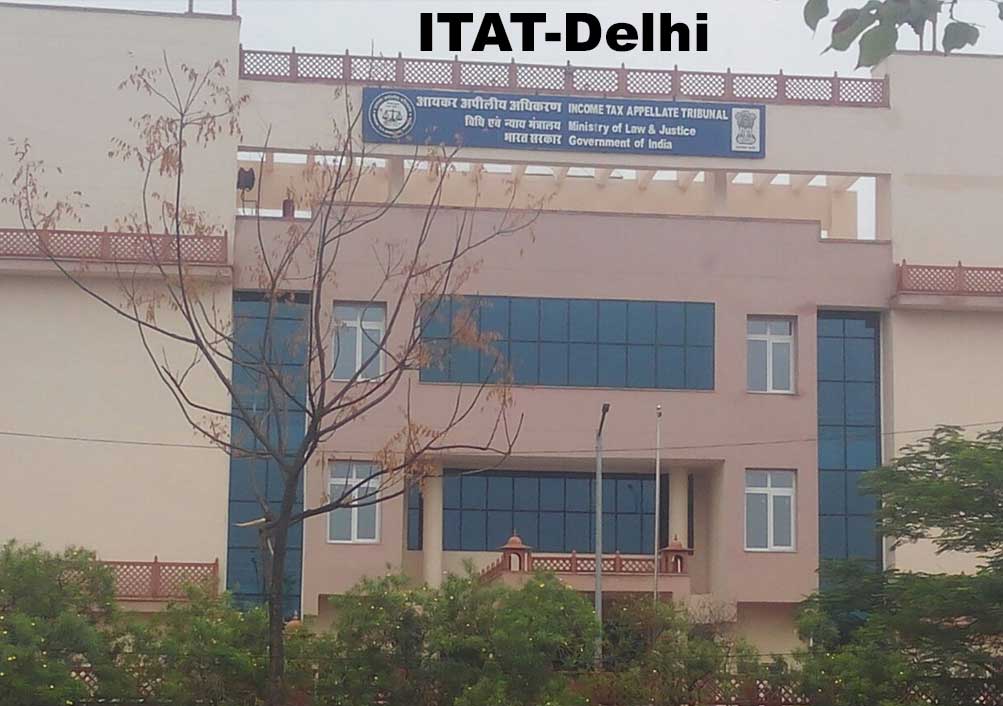
In ITA Nos. 9405 & 9406/Del/2019- ITAT - ITAT (Delhi) rules that Godaddy.com LLC not liable to pay penalties due to the debatable nature of the issue involved in the appeals and the fact that a substantial question of law has been framed by the Delhi HC in the quantum appeal
Members G.S. Pannu (President) & Astha Chandra (Judicial) [26-05-2023]
Read Order: ACIT (International Taxation) v. Godaddy.com LLC
Chahat Varma
New Delhi, May 27, 2023: Dismissing the appeal filed by the Revenue, the Delhi bench of the Income Tax Appellate Tribunal has held since the issue involved in the present appeals was debatable and since a substantial question of law had been framed by the Delhi High Court in the quantum appeal filed by Godaddy.com LLC (assessee), the penalties imposed in both assessment years were not exigible.
In the present case, the Revenue had raised the common ground of appeal of whether the Commissioner of Income Tax [CIT(A)] had erred in holding that the issue of royalty income in the hands of entity providing service in registration of domain name was still not settled even though the Supreme Court in the case of Satyam Infoway Ltd. Vs. Sifynet Solutions Pvt. Ltd. [LQ/SC/2004/690] have held that domain name was intellectual property similar to trade mark.
Briefly stated facts of the case were that the assessee, registered in the USA, was engaged in the business of providing facilitation of domain name registration, web-hosting, web designing and other services through its web site, godaddy.com. The revenue generated from the domain registration services in AY 2014-15 was not offered to tax by the assessee on its bonafide reasons to believe that such income is not chargeable to tax in India as per the provisions of the Act. However, the Assessing Officer (AO) assessed the income from domain name registration services as 'royalty' under section 9(1)(vi) read with section 115A of the Income Tax Act, as well as under Article 12 of the India-USA Double Taxation Avoidance Agreement (India-USA DTAA). The AO determined that the income was received by the assessee for granting customers the right to use its server, which was considered as the right to use industrial, commercial, or scientific equipment.
The AO issued show cause notices to the assessee under section 274 read with section 271(1)(c) of the Income Tax Act, asking the assessee to explain why a penalty should not be levied. The assessee responded by submitting that they were already in appeal before the High Court against the order of the Tribunal and requested that the penalty proceedings be kept in abeyance. However, the AO did not accept the submissions and proceeded to levy a penalty under section 271(1)(c) of the Act. The assessee appealed to the CIT(A) against the penalty imposed by the AO and the CITA(A) deleted the penalty that was imposed. Aggrieved by the same, the Revenue filed the appeal.
In the light of the decisions in Commissioner of Income Tax II v. Liquid Investment and Trading Co. [LQ/DelHC/2010/4537] and Shri Yugal Kishore Jajoo v. Dy. CIT [LQ/ITAT/2013/1775], the Tribunal dismissed the appeal filed by the Revenue and held that the CIT(A) had rightly deleted the penalty.
Legitquest is a Legal-Tech venture run by a versatile team of tech-savvy attorneys, engineers and designers who aim to make the practice of law simpler for its end users. We have eminent jurist Mr. Ram Jethmalani as our patron



Add a Comment