
In Criminal Appeal No. 3341 of 202 -SC- Bail cannot be cancelled without giving opportunity to be heard; accused cannot be punished for advocate’s default: Supreme Court restores bail of POCSO accused
Justice Abhay S. Oka & Justice Pankaj Mithal [30-10-2023]
Read Order: Purushothaman V. State of Tamil Nadu
Chahat Varma
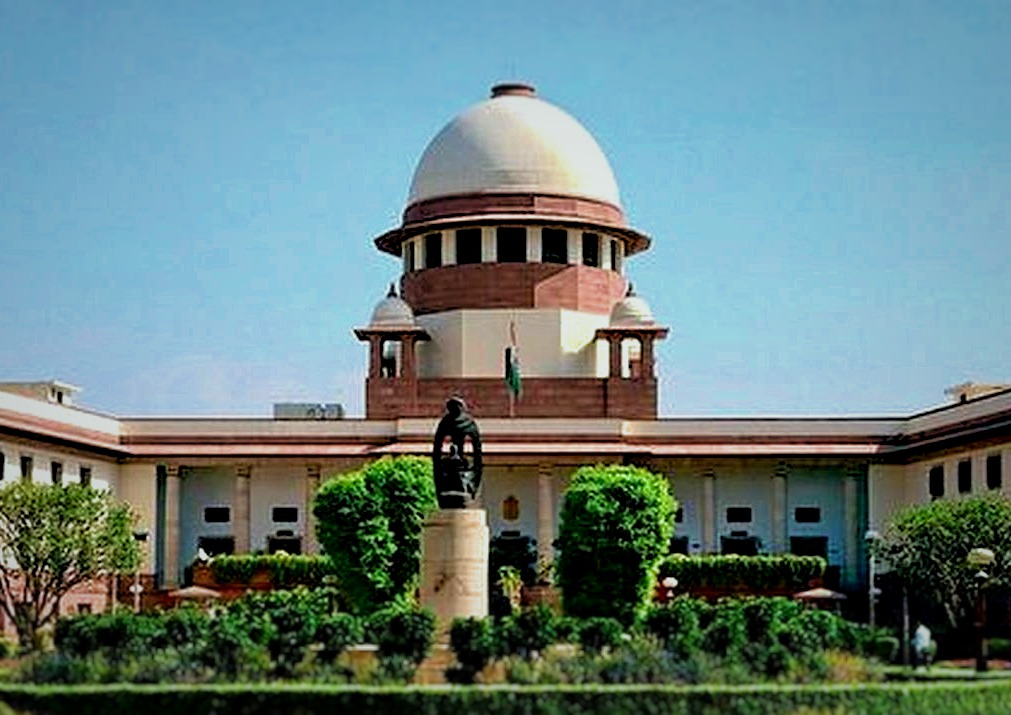
New Delhi, November 3, 2023: The Supreme Court has restored the bail of an accused in a POCSO case, which had been cancelled by the Tamil Nadu High Court without giving him an opportunity to be heard.
In the case at hand, the appellant, who was accused of an offense under Section 6 of the Protection of Children from Sexual Offenses Act, 2012 (POCSO Act), was initially convicted by the Trial Court. The appellant subsequently appealed the conviction, and the Tamil Nadu High Court accepted the appeal. On January 12, 2018, the High Court suspended the appellant's substantive sentence and granted him bail.
However, on July 7, 2023, during the proceedings of the Criminal Appeal, the appellant's legal representative requested a four-week adjournment. The High Court, only on the ground that the appellant was enjoying the facility of bail and that his advocate applied for adjournment, proceeded to cancel the bail.
The division bench, comprising of Justice Abhay S. Oka and Justice Pankaj Mithal, stressed that when the advocate representing the appellant-accused sought adjournment on untenable and unreasonable grounds, the Appellate Court had the authority to refuse the request for adjournment.
The bench referred to Bani Singh v. State of U.P. [LQ/SC/1996/1044], which highlighted the High Court's discretion to appoint an advocate to represent the appellant when the originally appointed advocate declined to argue the appeal on unreasonable grounds.
The bench clarified that under sub-section 1 of Section 389 of the Cr.P.C., when suspending the sentence of the appellant-accused who is in jail, the Appellate Court was required to release the accused on bail until the final disposal of the appeal. The second proviso to sub-section 1 of Section 389 allowed the Public Prosecutor to request the cancellation of the bail granted under sub-section 1. This second proviso to sub-section 1 of Section 389 was equivalent to sub-section 2 of Section 439 of the Cr.P.C. Consequently, the court can even Suo Motu issue a notice calling upon the accused to show cause why the bail should not be cancelled. Under no circumstances, the bail granted to an accused under sub-section 1 of Section 389 can be cancelled without giving a reasonable opportunity to the accused of being heard.
Thus, the bench concluded that in the present case, regrettably, the High Court had immediately cancelled the bail granted to the appellant-accused without affording them an opportunity to be heard on the matter.
“Such approach on the part of the High Court cannot be countenanced especially when the High Court can always deal with the situation when an adjournment is sought by the advocate for the accused at the time of final hearing of the appeal on unreasonable grounds,” said the court.
The bench emphasized that due to the advocate's default, the Appellate Court could not penalize the accused by deciding to cancel his bail solely based on the advocate seeking adjournment.
Consequently, the court quashed the impugned order and restored the earlier order dated 12th January 2018, which granted the appellant suspension of sentence and bail.
With these considerations, the present appeal was allowed.
Legitquest is a Legal-Tech venture run by a versatile team of tech-savvy attorneys, engineers and designers who aim to make the practice of law simpler for its end users. We have eminent jurist Mr. Ram Jethmalani as our patron

Add a Comment