
Delhi HC discharges Income Tax Officer in corruption case where video recordings and clips did not reflect any demand for illegal gratification
Justice Sudhir Kumar Jain [15-01-2024]
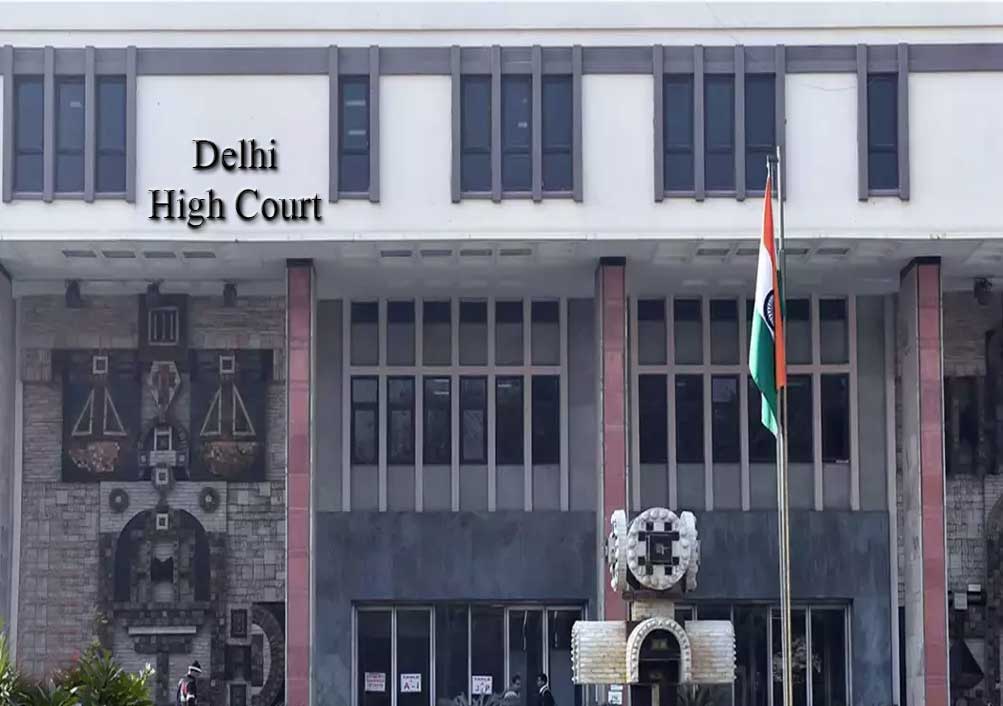
Read Order: YOGENDRA MITTAL v. CENTRAL BUREAU OF INVESTIGATION (In CRL.M.C. 6183/2019-DEL HC)
LE Correspondent
New Delhi, January 17, 2024: The Delhi High Court has allowed an appeal of an Income Tax Officialin a bribery case, after considering the fact that the material placed on record was not sufficient to establish demand for gratification by the petitioner and no recovery of tainted money was affected from him.
The facts of the case were that a written complaint was made byEOW Inspector seeking necessary legal action regarding illegal gratification demanded by and paid to senior Income Tax Officers. Pursuant to the alleged disclosure statement of accused made in FIR was registered by CBI, AC-1, New Delhi under section 120-B IPC and under sections 7, 12, 13(2) read with section 13(1) (d) of PC Act.
It was alleged that the accused along with his wife Priyanka Dev were running a firm under name and style of M/s Stock Guru India and had guaranteed to provide a return on the principal amount followed by a subsequent refund of the principal amount to the seventh month, by prudent and sourced based investments in the share market. However, instead of refunding their investments as promised, the accused and Priyanka shut down their office and ran with the collected money.
The accused and his wife were arrested. The accused during the course of custodial interrogation disclosed that raids were conducted at his office and residence and large cash amount was misappropriated by Income Tax (IT) officers and subsequently demands were raised and there was acceptance of illegal gratification by Yogender Mittal, ADIT, IT Department, Jhandewalan, New Delhi (petitioner).The accused disclosed that at the time of search he had offered illegal gratification to the petitioner from recovered money to help him in the matter. However, the petitioner demanded illegal gratification from the source other than the already recovered money for showing favor by preparing a favorable appraisal report within 12 months, showing that the accused had an income of Rs105 crore and adjust the recovered money as Income Tax.
The petitioner also promised the accused that all frozen accounts would be opened if he could arrange money for him. The accused also revealed that petitioner had spoken to other IT officials namely, Mr. Garg and Mr. S. K Singh who were also appraised about the offer of the accused. The accused alleged that instead of returning 50% of the cash recovered from Bhiwadi, the petitioner made further demand of Rs30 croreto settle the matter.
The accused further disclosed that he after paying Rs5 croresuspected intentions of the petitioner and therefore recorded the conversations with the petitioner. Thevideos indicated that the recovered cash to the tune of Rs42-44 crores was misappropriated by Income Tax officers and further bribe of Rs30 crores was demanded and out of which Rs15 crore were obtained by the petitioner through an unknown person. Accordingly, a case was registered by the CBI, New Delhi under Sections 120-B IPC & Sections 7, 12, 13(2) read with 13(1) (d) of PC Act.
The petitioner-accused filed a petition under section 482 of the Code of Criminal Procedure, 1973 for setting aside the impugned order passed by the court of Special judge CBI (PC Act)-02, (Trial court) passing an order on charge and also framingcharges against the petitioner.
Referring to section 27 of the Indian Evidence Act, the single-judge Bench of Justice Sudhir Kumar Jain opined that this provision incorporates the theory of confirmation by subsequent facts i.e. statements made in police custody are admissible to the extent that they can be proved by subsequent discovery of facts. It was reflecting that in pursuance of disclosure statement made by the accused, spy watch and hard disks containing audio video recording of conversation between the petitioner and the accused were recovered which is a valid recovery within mandate of section 27 of the Indian Evidence Act, 1872. The delay if any in recording of disclosure statement under given facts and circumstances of present case does not invalidate recording of disclosure statement, the Bench held.
Moreover, the Bench opined that in view of decisions of Anvar P.V. V P.K. Basheer, [LQ/SC/1998/690] , Arjun PanditraoKhotkar V Kailash KushanraoGorantyal, [LQ/SC/2020/558 ;] and State of Karnataka V T. Naseer@ Nasir@ Thandiantavida Naseer Umarhazi@Hazi& others, the prosecution is required to file certificate under section 65B of the Indian Evidence Act, 1872 in respect of hard disks but it is settled law that certificate under section 65B of the Indian Evidence Act,1872 can be filed at any stage of trial and filing is not confined to stage of consideration and framing of charge. Hence, the Bench found no force in arguments advanced by the counsel for the petitioner that prosecution against the petitioner was bad for want of certificate under section 65B of the Indian Evidence Act, 1872. The CFSL Report had also confirmed that the audio recordings were continuous and without any tampering.
The perusal of transcripts of video recordings and clips of calls did not reflect any demand of gratification from the accused by the petitioner.The Bench affirmed that the court is not expected to act a mere Post Office at the time of framing of the charge and must indeed sift the material produced and relied upon by the prosecution. The sifting of the evidence should not be meticulous and the court should not don the mantle of trial judge hearing argument after full-fledged trial. The court must be satisfied with the material available on record that the case is made out for the accused to stand trial. A strong suspicion founded on the relevant material would suffice which can be translated into evidence at the stage of trial.
Thus, observing that the material collected during the investigation by the respondent/CBI was not sufficient to frame the charge against the petitioner, the Bench allowed the petition.
Legitquest is a Legal-Tech venture run by a versatile team of tech-savvy attorneys, engineers and designers who aim to make the practice of law simpler for its end users. We have eminent jurist Mr. Ram Jethmalani as our patron

Add a Comment