
About Rs 111.05 crore paid to entities controlled by applicant with intent to siphon off of money &assets: Delhi HC declines bail to PMLA accused for carrying out series of sham transactions
Justice SwaranaKanta Sharma [05-02-2024]
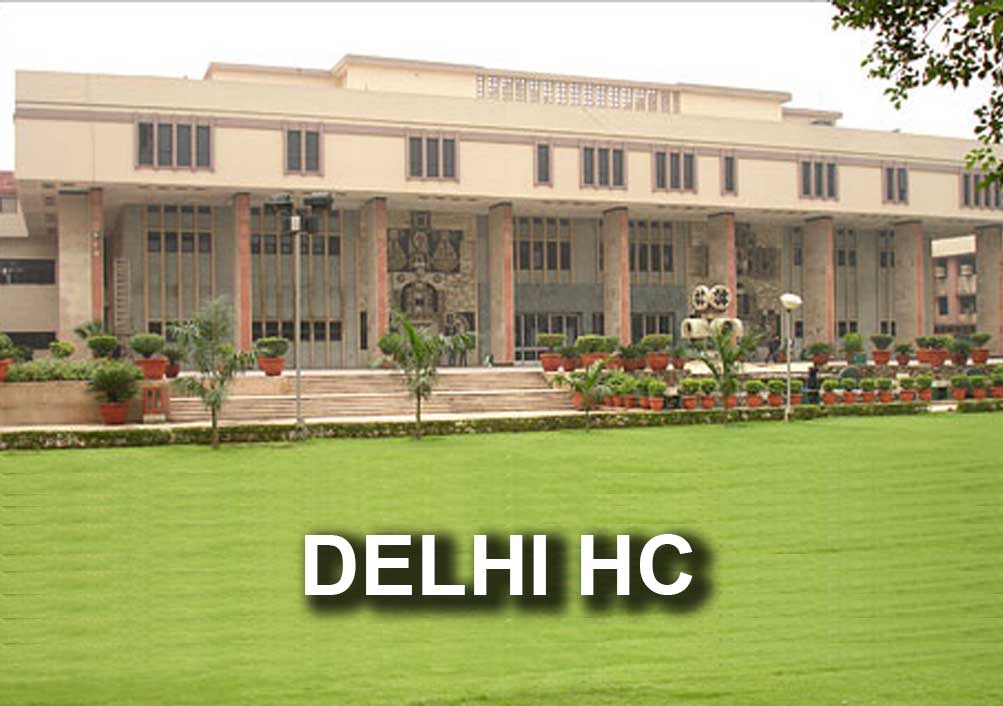
Read Order: DALIP JINDAL v. DIRECTORATE OF ENFORCEMENT [DEL HC- BAIL APPLN. 1549/2023]
Tulip Kanth
New Delhi, February 15, 2024: The Delhi High Court has refused to grant bail to a man booked under the provisions of the Prevention of Money Laundering Act, 2002 as the applicant was involved in the process of acquisition, possession, concealment of proceeds of crime obtained by way of cheating and forgery. The High Court was of the view that he had committed an offence of money-laundering under Section 3 of PMLA.
The Single-Judge Bench of Justice SwaranaKanta Sharma was considering an application filed u/s 439 of the Code of Criminal Procedure, 1973 (Cr.P.C) read with Section 45 of the Prevention of Money Laundering Act, 2002 (PMLA) by the applicant/petitioner, seeking grant of regular bail, in a case pending before the court of Special Judge, CBI registered under Section 3 and 4 of PMLA.
It was the case of the prosecution that Bankey Behari Group of Companies, namely M/s Deluxe Cold Storage and Food Processors Ltd and others were all engaged in the business of manufacturing and trading of pulses, wheat etc. and these business entities had availed working capital funds from several banks. During the period from December 2016 to March 2017, all these companies were declared as NPA due to default in repayment of loan amounts. On the basis of Forensic Audit Reports, the Banks had lodged complaints with CBI, leading to registration of seven FIRs/RCs against seven companies/firms of Bankey Behari Group of Companies. It was revealed that these entities had availed credit facilities to the tune of Rs 480 crore, and the total amount defrauded was around Rs527.32 crore.
As per prosecution, this case involved default in payment of Cash Credit Limit availed by Bankey Behari Group of Companies and the CC limit had been extended on hypothecation of inventory, trade receivables (sundry debtors) and other moveable assets. It was discovered during investigation Bankey Behari Group of Companies were making entries for bogus/paper sale to its customers under different broker codes. Further during investigation, it was found that the Company was involved in paper sale and purchase with paper companies, created at the behest of Director Amarchand Gupta, his son Ramlal Gupta and his nephew Sanjay Kansal.
It was found that the CC limit fund was siphoned in the form of share capital amounting to the tune of Rs. 149.02 crore, in the form of bank interest to the tune of Rs. 232.98 crore, and in the form of Income tax expenses to the tune of Rs. 38.66 crore, i.e. total amount of Rs. 420.66 crore. It was also found that 85-90% of the business of M/s Shree Bankey Behari Food Processors Pvt. Ltd., was on paper i.e. without actual movement of goods. During investigation, the Directorate of Enforcement had also found that the present applicant Dalip Jindal was involved, through his companies, in sales and purchase, when there was no actual movement of goods.
In view of these facts, all the seven ECIRs against the Bankey Behari Group of Companies were amalgamated into one complaint. The complaint was filed against 44 accused persons. Six accused were arrested including the applicant Dalip Jindal.
One more ECIR had also been registered where there are allegations of defrauding the banks and causing a wrongful loss to the tune of Rs. 604.81 crore. The present applicant was not arrested in that case and the complaint was filed without arrest. The applicant herein was admitted to bail in that case.
The applicant had argued that his arrest of the applicant in this case was made in complete ignorance of the fact that the entire incriminating material against the applicant was same and was already in the possession of the agency at the time of filing of prosecution complaint in the other complaint case where he had not been arrested by the agency and was later granted bail by the Trial Court. Therefore, it was argued that the arrest of the applicant on the very same material in the present case was an arbitrary exercise of power to arrest provided under Section 19 of PMLA.
It was also submitted that the prosecution cannot be permitted to club seven ECIRs in one complaint and leave out one ECIR to be filed separately through another complaint. It was argued that the applicant held no position in these companies and no direct role had been assigned to the applicant in commission of alleged offence.
After perusing the prosecution complaint and statements of applicant recorded under Section 50 of PMLA as well as other material on record, it appears prima facie that the applicant, through his companies had indulged in paper/bogus sales and purchase of goods, even though there was no actual movement of goods. The applicant had also failed to provide any documents to prove his transactions with Bankey Behari Group of companies as genuine. Further, he had accepted in his statement that he had shown paper purchase and paper sales with Bankey Behari Group of Companies.
The Bench took note of the fact that the applicant herein, through his entities, had sold goods of about Rs. 314.57 crore and purchased goods of Rs. 200.83 crore, between the period 2013- 14 to 2016-17. However, on account of such false sale and purchase, the applicant had settled these transactions by passing journal voucher entries to the tune of Rs. 201.32 crore between the period 2013-14 to 2016-17, and a sum of Rs. 113.25 crore had been diverted to the bank accounts of the applicant.
“Therefore, the applicant, through his companies, had carried out a series of sham transactions wherein he had purchased and sold goods with the entities of Bankey Behari Group of Companies and had passed adjustment entries by way of journal vouchers, and about Rs 111.05 crore were paid to entities controlled by the applicant with intent to conceal and siphon off of money and assets (inventory)”, the Bench said.
The applicant’s Counsel took the Court through the entries and other documents so as to point out as to how the same would not lead to conclusion of money laundering. On this action, the Bench said, “…while dealing with the present bail application, this Court is of the opinion that it cannot go through the entire list of entries of accounts for the purpose of appreciating their genuineness or authenticity. The cognizance of prosecution complaint has already been taken by the learned Trial Court vide order dated 24.02.2023”.
In view of material available on record against the applicant, the Bench opined that twin conditions under Section 45 of PMLA were not satisfied. Thus, the Bench dismissed the application.
Legitquest is a Legal-Tech venture run by a versatile team of tech-savvy attorneys, engineers and designers who aim to make the practice of law simpler for its end users. We have eminent jurist Mr. Ram Jethmalani as our patron

Add a Comment